My Role and Involvement
UX Design
Research
Visual design
Direct Contributors
Product manager: Ritika A.
Product manager: Mondrian H.
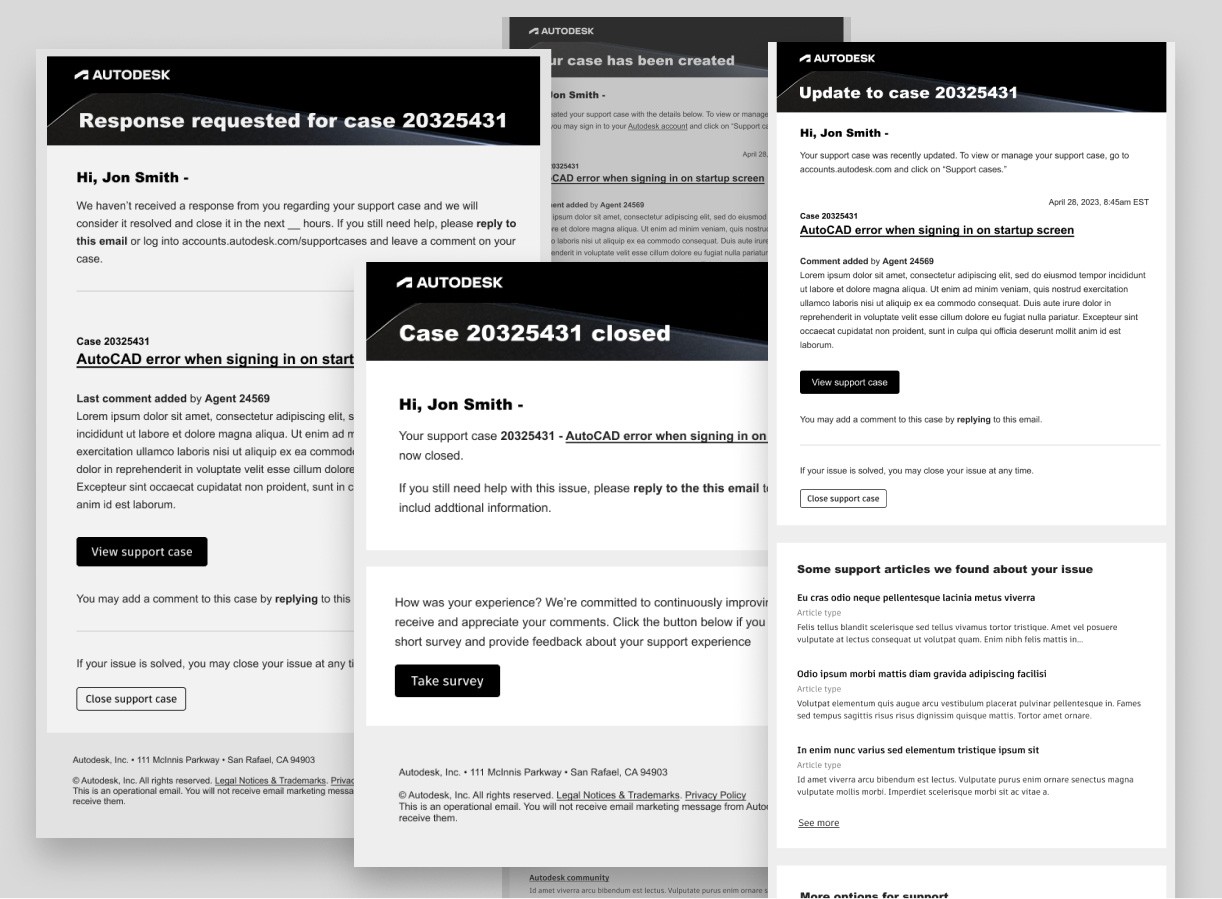
Through user research on a parallel project, I discovered the existing email experience for support cases was fragmented. Customers often mistook the emails for spam, lost context about the support case, and had no direct link to view or manage their case.
Although the email system was technically out of scope of the original project, I advocated for its inclusion. I proposed a modernization effort to bring support case emails up to the quality and consistency of Autodesk’s designs system.
Problem
The emails that customers used to interact with their support case lacked essential information such as links to the full case record and context of the issue which lead to increased customer effort and longer case lifespans. Also, the outdated visual design caused many users to mistake them for spam.
Goal
Modernize the support case email experience and elevate it to a standard that reflects Autodesk’s brand, restores confidence, and helps customers feel supported and informed throughout the resolution process.
Role
I was the sole designer on this project and the only advocate initially pushing for improvements to the support case email experience. I worked to gain buy-in from parallel teams responsible for the email infrastructure and delivery, aligning stakeholders around a shared vision to improve a critical part of the support journey.
Process
I audited the end-to-end customer journey within the support case management portal, and noticed that many users were interacting with their cases primarily through email rather than the portal itself. Driven by this insight, I expanded my research to examine the full set of emails customers received throughout a case’s lifecycle. It quickly revealed significant usability gaps and must-have functional improvements.
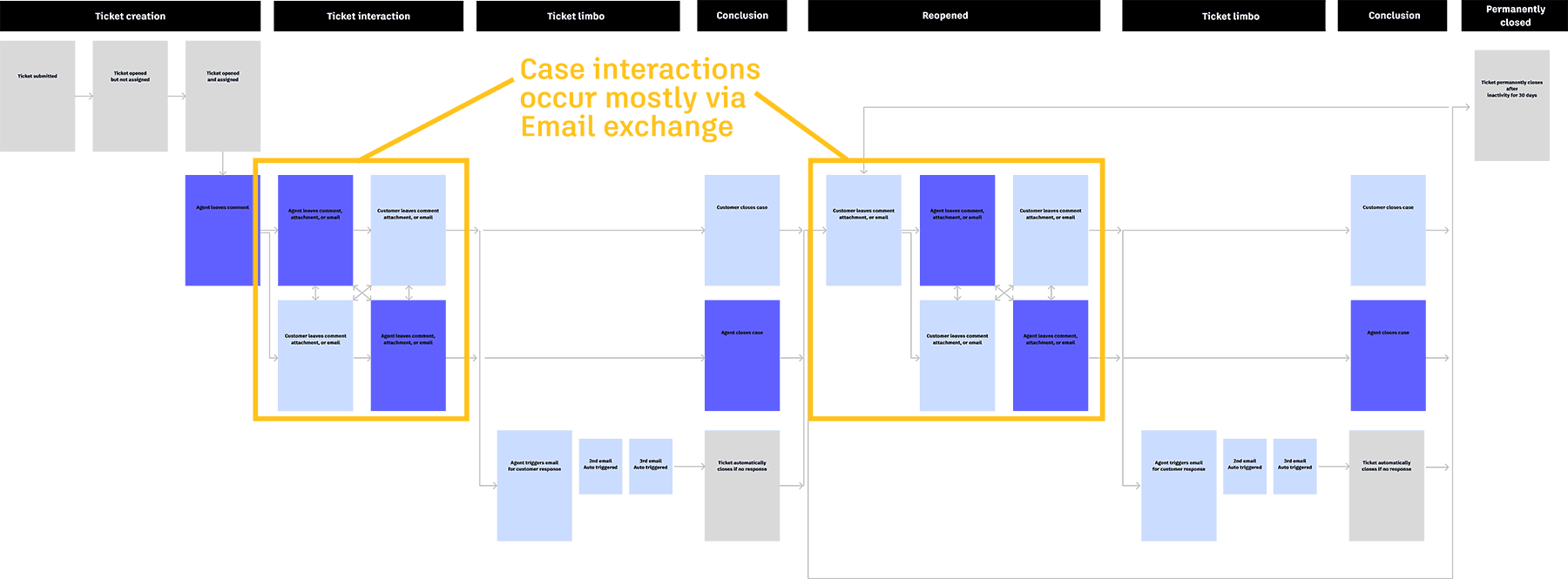
I mapped each email touchpoint a customer receives during the support case lifecycle. I also captured direct customer feedback, analyzed sentiment throughout the journey, and identified gaps in expectations by benchmarking against other support email experiences.
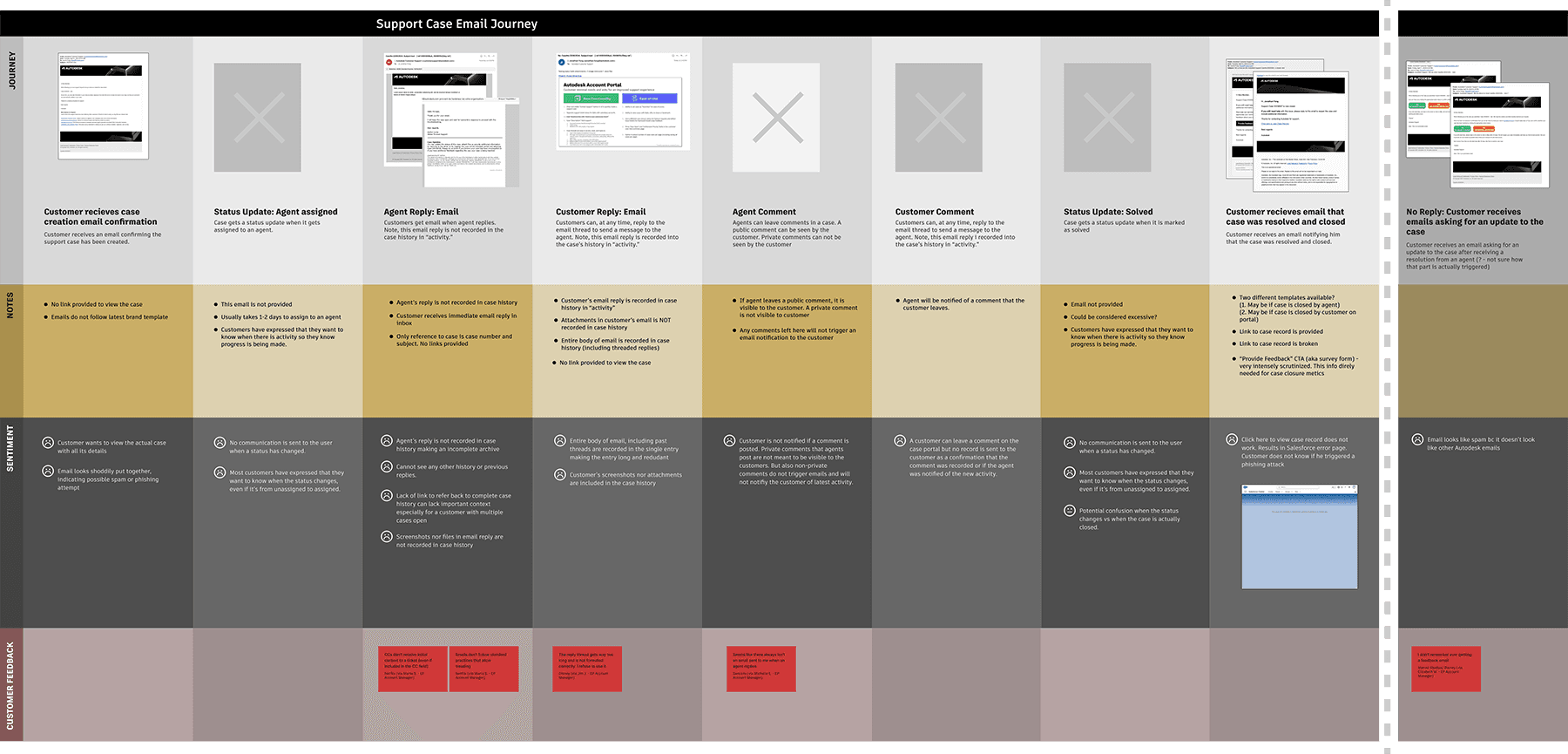

The customer wants to view the actual case with all its details
Email looks shoddily put together, indicating possible spam or phishing attempt
No communication is sent to the user when a status has changed.
Agent’s reply is not recorded in case history making an incomplete archive
Cannot see any other history or previous replies.
Lack of link to refer back to complete case history can lack important context especially for a customer with multiple cases open
Screenshots nor files in email reply are not recorded in case history
A customer can leave a comment on the case portal but no record is sent to the customer as a confirmation that the comment was recorded or if the agent was notified of the new activity.

Potential confusion when the status changes vs when the case is actually closed.
Click here to view case record does not work. Results in Salesforce error page. Customer does not know if he triggered a phishing attack
Certain comments and attachments would be missing from either email notifications or the main case record. The existing support emails also lacked clear hierarchy and structure which the new template could help to address. Direct links to the web portal and context from the most recent reply were also missing. In some instances, outdated call-to-action designs made the emails be mistaken for spam, causing users to ignore or delete them.
Old Emails
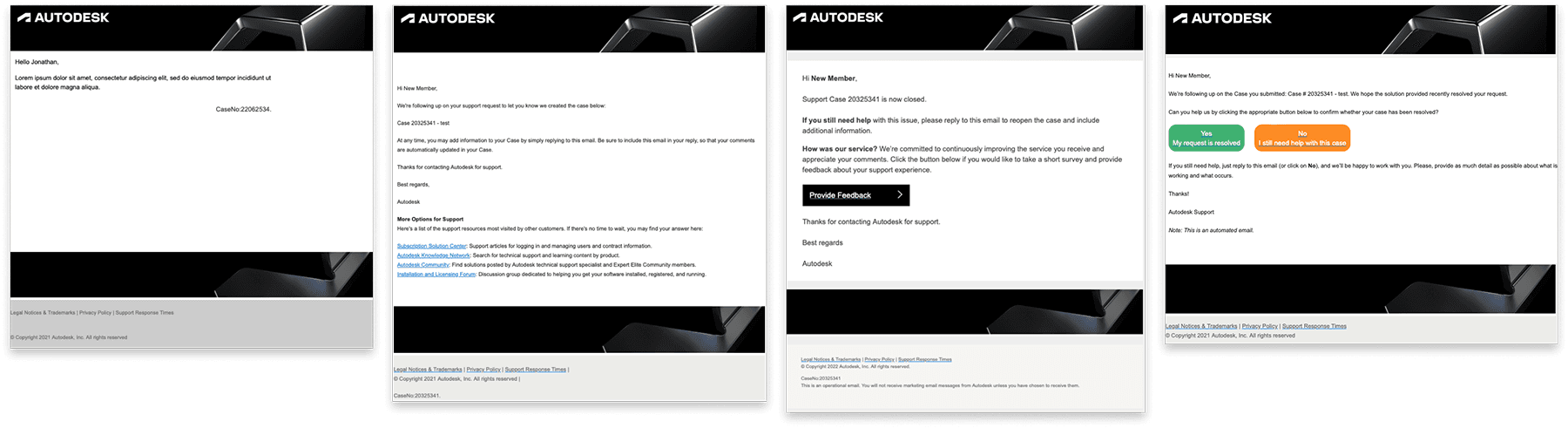
Greets customer by name
Does have case number referenced
Gives customer clear instructions to reply via email
Agent reply email has links for suggestions and self-help
Most do not reference the case subject/title. Customers with multiple cases open do not know which case the email refers to
Does not have link to main case record (management portal)
Does not contain original case subject
No additional information to get help in the meantime
Capitalization is inconsistent
Off-brand CTA styling makes the email look like spam
No formatting / heirarchy
'Provide feedback' takes up majority of email content. Makes customer feel like their 'feedback' is more important than the service they received
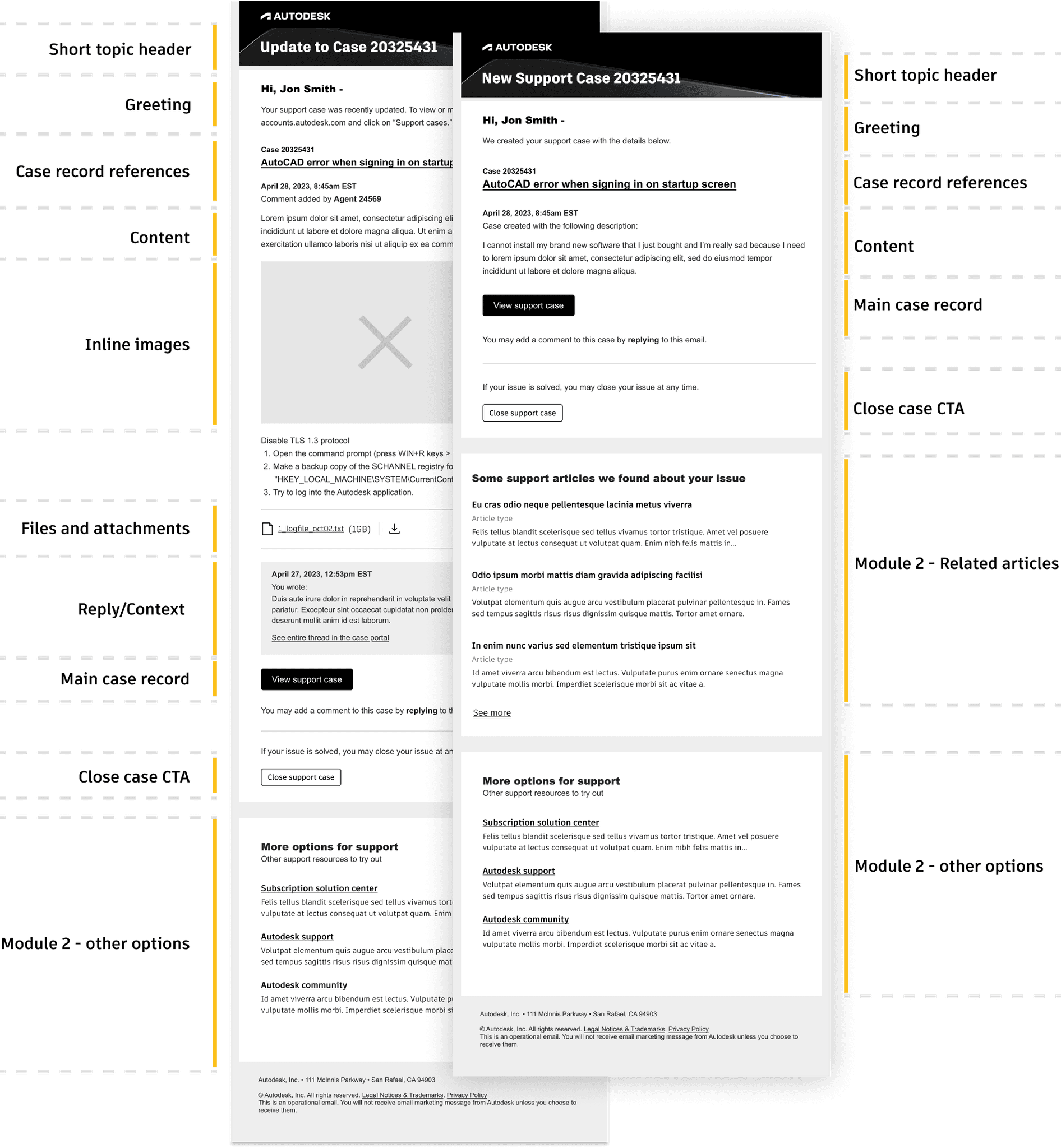
New Emails
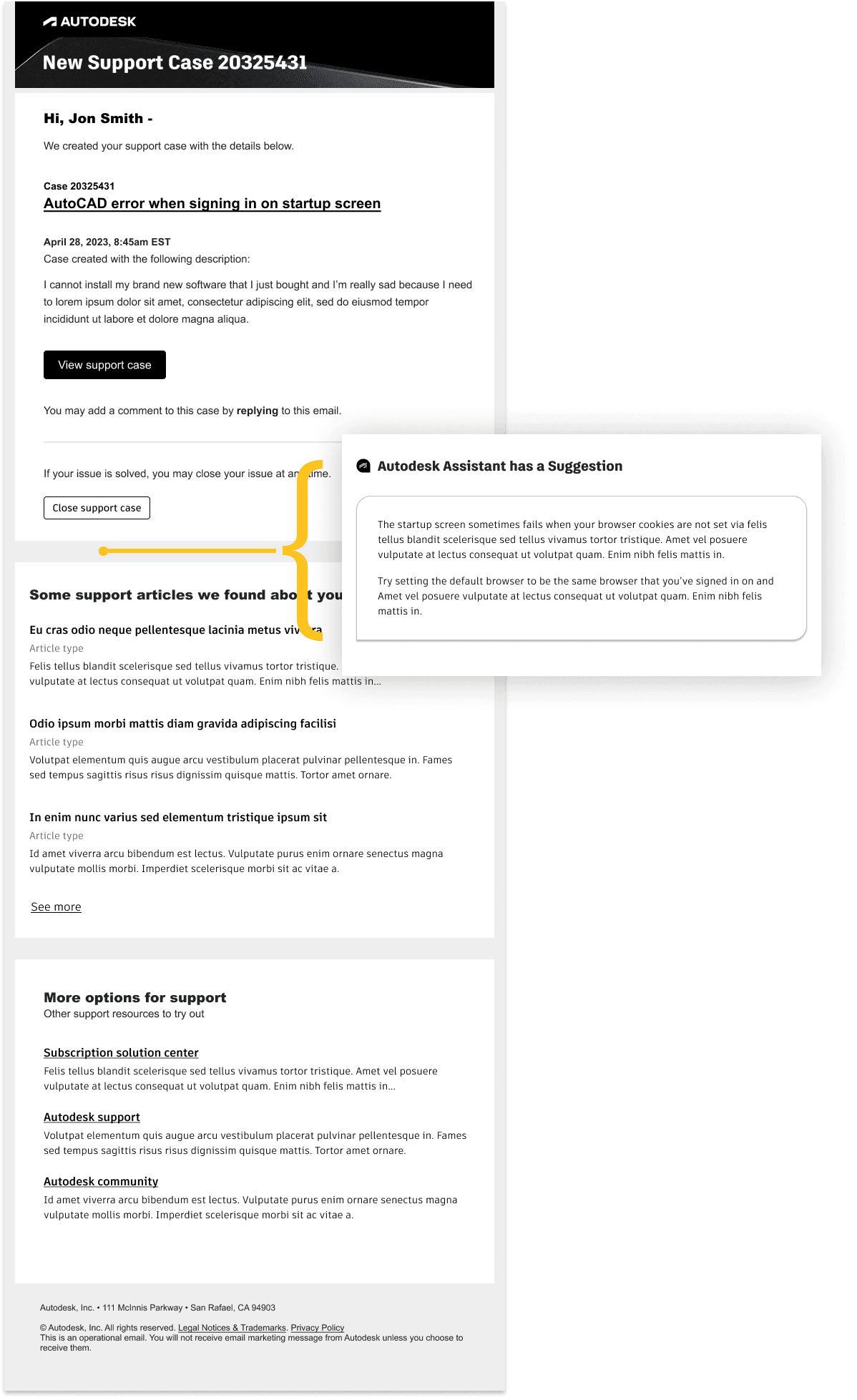
I applied Autodesk’s current email design patterns to modernize the outdated support case emails. I kept the template's modular components to enable flexible, swap-in/swap-out sections.. Added a direct link to the support case on the new web portal, enabled inline image display, including the most recent reply for context, and providing the option to close the case directly from the email.
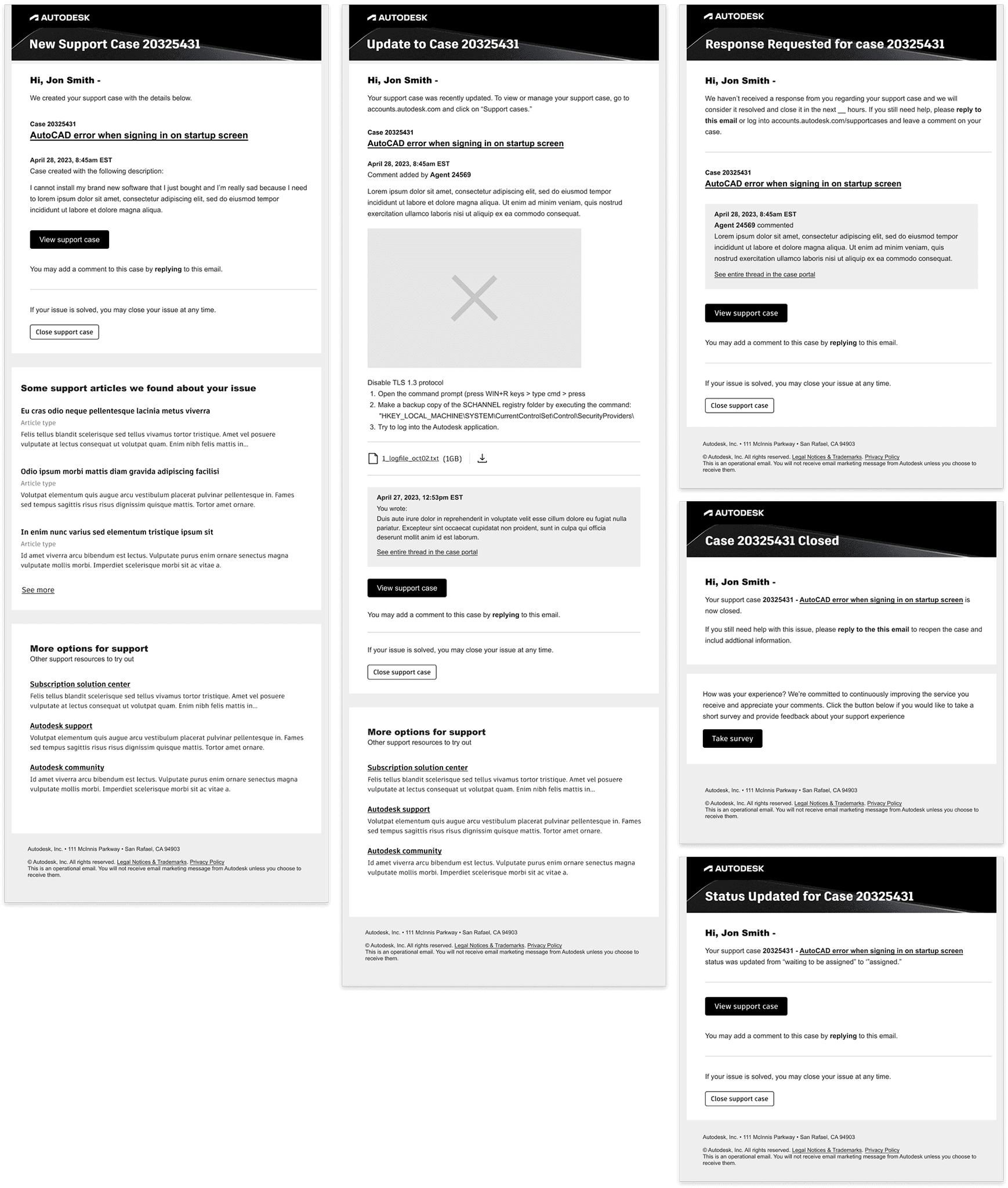
After several rounds of user testing and feedback, I refined the email layouts to improve readability and clarify the purpose of each message. The final designs for the emails are below.
Extending the Experience with AI
As AI gained traction in the support space, I explored low-effort, high-impact opportunities to integrate it into the experience. By leveraging the scalable, modular email templates, I identified a path to eventually embed AI-generated responses directly within the emails. This future enhancement could empower users to resolve issues independently, reducing the need for agent intervention and enabling faster case resolution.
Outcome
Although I had completed the final design solutions, there was a separate team that owned the email infrastructure. I proactively reached out to that team’s leadership, and pitched the opportunity..
The team agreed to incorporate one key improvement: adding direct links to the new support portal in their existing email templates. While this didn’t address all the identified issues, it marked a meaningful step forward in improving the customer experience. Given that the initiative wasn’t originally on their roadmap, we aligned on a small but impactful compromise.
A year later, a manager from another team independently recognized the same email issues and began to raise a concern. I was able to share that I completed the foundational work as part of another project. She was delighted to find out that I took the initiative to complete the work and ultimately included it as a future roadmap item.
Takeaway
This project taught me that sometimes the most important design work happens outside your immediate scope, and that documenting solutions for future opportunities can be just as valuable as immediate implementation.
I discovered critical email experience gaps while researching the support portal. Though emails were technically out of scope, I felt responsible for the complete user journey and advocated for improvements.
When I couldn't get full buy-in initially, I completed the design work anyway and continued socializing the problem. A year later, when another team independently identified the same issues, my prior work enabled immediate progress rather than starting from scratch.
I learned that proactive user advocacy, even without immediate implementation, creates lasting value. Sometimes planting seeds for future improvements is just as impactful as solving today's problems.